


In many building projects, design is approached in fragments. An architect designs the structure,
an interior designer is brought in later to “dress” the spaces, and landscaping is often treated as a
final add-on once construction is complete. While this sequence is common, it is also one of the
most significant reasons projects suffer from visual disconnects, technical conflicts, and
escalating costs.
The Problem with Fragmented Design
When design disciplines are engaged at different stages, decisions made early often limit
possibilities later. Structural elements may conflict with interior layouts, service routes may
restrict furniture planning, and outdoor spaces may feel disconnected from the building they
surround. These issues are rarely intentional, but they are costly—both financially and
experientially.
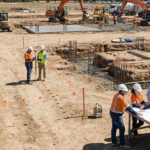
Clients often discover these conflicts mid-construction, when changes are expensive, timelines
are affected, and compromises become unavoidable. More importantly, the final outcome may
feel visually inconsistent, as if the building, its interiors, and its landscape belong to different
narratives.
Designing Inside and Outside as One Experience
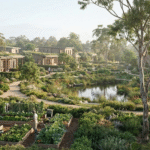
One of the strongest advantages of an integrated approach is the seamless relationship between
indoor and outdoor spaces. When architecture and landscape are designed together, decisions
about openings, views, levels, and circulation are aligned from the outset. Interior spaces naturally
extend into outdoor areas, and the landscape becomes an active part of daily living rather than a
decorative backdrop.
This early coordination prevents visual and spatial disconnects. Material transitions feel
intentional, proportions are balanced, and the overall environment develops a strong sense of
place. The building does not sit on the landscape—it belongs to it.
Technical Coordination Starts Early
Integrated design is not only about aesthetics; it is fundamentally about technical clarity. When
architects, interior designers, and landscape designers collaborate from the planning stage,
critical systems such as structure, electrical layouts, plumbing, lighting, and services are
coordinated holistically.
Interior furniture layouts influence electrical and lighting planning. Landscape grading affects
drainage and structural design. Service routes are planned to support both functional and spatial
requirements. This level of coordination significantly reduces on-site conflicts and ensures
smoother execution.
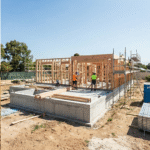
By resolving these relationships early, the design team avoids reactive problem-solving during
construction—a phase where changes are both disruptive and expensive.
Smarter Planning, Better Use of Space
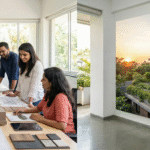
An integrated approach also leads to more efficient use of space. When interior layouts are
developed alongside architectural planning, circulation is clearer, storage is better resolved, and
room proportions are more comfortable. There is less wasted space and fewer compromises.
Landscape planning further enhances this efficiency by extending usable areas outdoors—
courtyards, terraces, and transitional spaces become functional extensions of the interior rather
than isolated zones.
Why Choose a Multidisciplinary Practice
At Deepa & Jayesh, Integrated Architecture is not a service add-on—it is the foundation of how
we design. With over 18 years of experience, we guide projects from concept to execution with
accountability and precision. Our multidisciplinary structure allows us to manage complexity
while maintaining clarity, ensuring that every layer of design supports the larger vision.
Choosing an integrated practice means choosing coherence over fragmentation, foresight over
reaction, and long-term value over short-term fixes. It is an approach that respects both the
client’s investment and the lived experience of the space.
-
CALL ANY TIME
9845537672 / 9880363890
-
SAY HELLO
deepaandjayesh@gmail.com